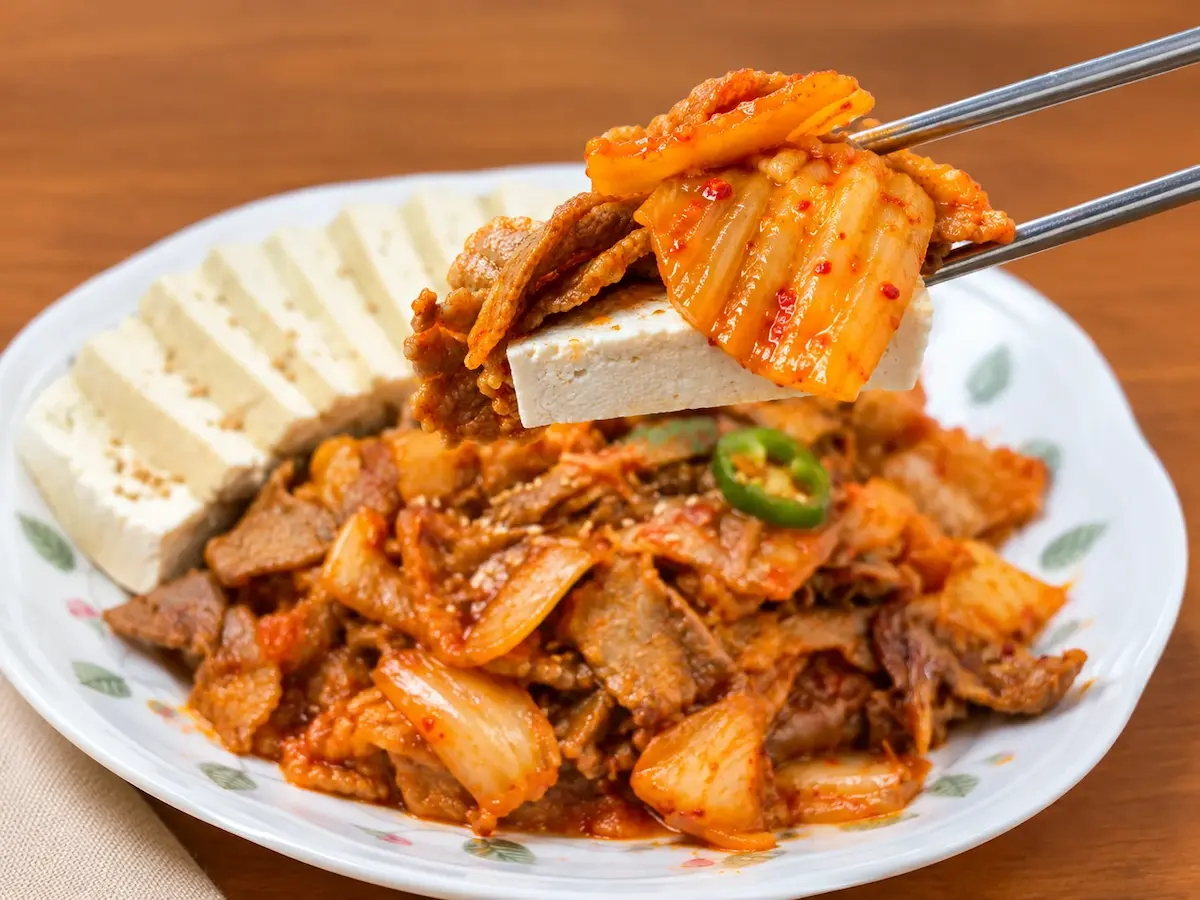
What Is Dubu Kimchi?
Dubu kimchi (두부김치) is a Korean dish made with stir-fried pork and kimchi, served with warm tofu.
It’s very simple to make, but I think it’s a filling and satisfying dish. You also get protein from both the pork and tofu.
If you love pork and stir-fried kimchi, I can almost guarantee you’ll enjoy this combination! ^^
And you don’t need any special seasoning. The kimchi already has plenty of flavor!
Ingredients
Servings: 2–3
Cooking time: About 20-25 minutes
- 250 g (about 9 oz) pork
- 350 g (about 12 oz) well-fermented napa cabbage kimchi
- 1 block of tofu
- 1 teaspoon cooking oil (if needed)
- 3 tablespoons kimchi juice
- 1 teaspoon sesame oil
- Sesame seeds for garnish
- Sugar or your preferred sweetener (optional)
For the pork, you can use pork shoulder or pork neck. Pork belly is also a good choice if you prefer a richer flavor.
How to Make Stir-Fried Kimchi with Tofu
Step 1. Prepare the Ingredients
Cut the pork into bite-sized pieces.
Cut the kimchi into shorter pieces, too. Save a little kimchi juice for later.
Remove the tofu from its package, discard the packing water, and gently rinse it under running water.
Step 2. Cook the Pork
Heat a pan over medium heat and add the pork.
If you’re using a lean cut of pork, add about 1 teaspoon of cooking oil.
If you’re using pork belly, you probably won’t need extra oil because it releases plenty of fat as it cooks.
Stir-fry until the outside of the pork begins to cook and some fat is released.

Step 3. Add the Kimchi
Once the pork has started cooking, add the chopped kimchi.
Stir-fry everything together, letting the kimchi cook in the fat from the pork.
Keep stirring until the kimchi softens and you can smell that delicious stir-fried kimchi aroma.

Step 4. Add the Kimchi Juice
When the kimchi has softened, add 3 tablespoons of kimchi juice.
I like my stir-fried kimchi to have a little juice. It tastes especially good when you eat it with tofu.
Stir-fry for a little longer so the pork and kimchi are nicely mixed together. Make sure the pork is fully cooked.

Step 5. Warm the Tofu
While the kimchi is cooking, warm the tofu in a separate pot.
Bring enough water to cover the tofu to a boil. Carefully add the tofu and let it warm for about 2–3 minutes.
Once it’s warm, remove it from the water, drain it, and cut it into slices.
Step 6. Finish with Sesame Oil
When the pork and kimchi are done, turn off the heat.
Drizzle 1 teaspoon of sesame oil over the stir-fry and sprinkle some sesame seeds on top.
That’s it!
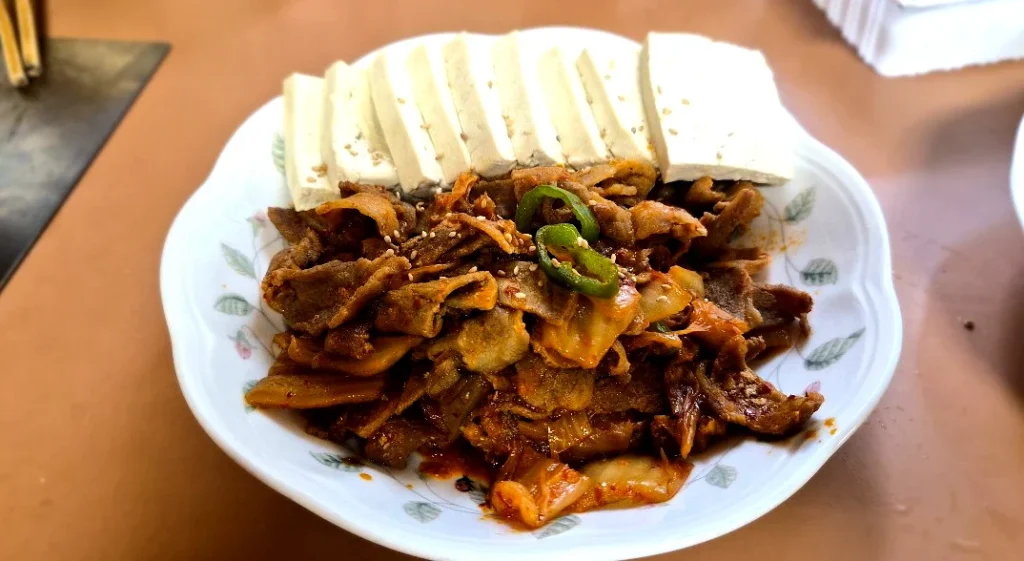
Arrange the warm tofu slices on a plate and place the stir-fried pork and kimchi next to them.
Now take a slice of tofu and top it with a little pork and kimchi.
Enjoy!
🍋Jin’s Cooking Tips
1. An Easy Way to Warm Tofu
I like to serve dubu kimchi with warm tofu. It tastes softer and more comforting that way.
The easiest way is to warm the tofu in hot water for about 2–3 minutes.
But if you want an even simpler method, you can use a microwave.
Slice the tofu first and place it on a microwave-safe plate. Cover it loosely and heat until warm.
After removing the tofu from its package, discard the packing water and give it a gentle rinse.
2. What If Your Kimchi Is Too Sour or Spicy?
I usually don’t add any extra seasoning when making dubu kimchi.
Why?
Because well-fermented kimchi already has so much flavor!
But if your kimchi tastes too sour or spicy, try adding a little sugar.
Start with 1–2 teaspoons, taste it, and add a little more if needed.
You can also use another sweetener instead of sugar. Just remember that different sweeteners have different levels of sweetness, so adjust the amount to your taste.
3. Save a Little Kimchi Juice
Don’t throw away all the kimchi juice!
Adding a little juice while stir-frying helps keep the pork and kimchi moist.
But don’t add too much, or you might end up making kimchi stew instead of stir-fried kimchi. ^^
A Little Story from Jin: Snow in April and Warm Dubu Kimchi
I used to work at a golf resort in Gangwon Province, Korea.
One year, something unexpected happened in April.
It was already spring, but suddenly, it started snowing heavily!
We had guests who had booked their golf rounds starting early in the morning. But with all that snow, they couldn’t play.
We had to rearrange the morning reservations and decided to keep the afternoon bookings as planned.
So, what did the staff do?
Everyone was called out to clear the snow!
We all grabbed shovels and went out onto the golf course.
Can you imagine shoveling snow in April? ^^
After working outside for quite a while, we were getting really hungry.
That’s when the ladies who worked in the resort restaurant prepared food for us.
And guess what they made?
Dubu kimchi!
They even brought it all the way out to us on the golf course.
Maybe it tasted extra good because we had been working so hard in the cold.
But I still remember how delicious it was.
I put some stir-fried pork and kimchi on a piece of warm tofu and took a bite.
I haven’t forgotten that taste.
Even now, when the weather gets cold, I sometimes think about the dubu kimchi we ate that day.
And when I do, I make it at home.
All I need is pork, kimchi, and tofu.
It’s such a simple dish, but it brings back a warm memory for me.
Korean Expression: “가성비가 좋다” (Gaseongbiga Jota)
There’s a Korean expression that comes to mind when I think about today’s dubu kimchi.
It’s “가성비가 좋다” (gaseongbiga jota).
I think Koreans really like efficiency. Maybe it’s because we like getting things done quickly! ^^
That’s probably why we often look for things that offer good value for money.
가성비 (gaseongbi) is short for 가격 대비 성능 (gagyeok daebi seongneung), which means “performance compared to price.”
When something is good for the price you pay, Koreans say:
“가성비가 좋아요.”
It’s good value for money.
For example:
“이 식당은 가성비가 좋아요.”
This restaurant offers good value for money.
It means the food is good, or you get a generous amount for the price.
“이 제품은 가성비가 좋아요.”
This product is good value for money.
It means the quality or performance is good for the price.
We use this expression not only for food but also for products and services.
And I think today’s dubu kimchi is a perfect example.
You only need three main ingredients—pork, kimchi, and tofu—but the taste is wonderful!
So, if you have some kimchi in your fridge, why not give this recipe a try?
With just a few ingredients, you can make a delicious and satisfying meal. ^^